
The Vagus Nerve and Anxiety: What the Research Actually Shows
Few anatomical structures have accumulated more wellness mythology per square centimeter than the vagus nerve. It has become a catch-all explanation for stress resilience, an aspiration toward "high vagal tone," and the marketing hook for everything from wearables to cold plunges. Some of this is grounded in real science. Some of it significantly overstates what the evidence supports. This is an attempt to separate the two.
What the Vagus Nerve Actually Does
The vagus nerve is the tenth cranial nerve and the primary parasympathetic outflow pathway of the autonomic nervous system. It's not a single fiber but a bundled nerve containing roughly 80,000 fibers — and crucially, about 80 percent of those fibers are afferent (carrying signals from body to brain) rather than efferent (carrying signals from brain to body). This upward directionality is essential to understanding its role in anxiety.
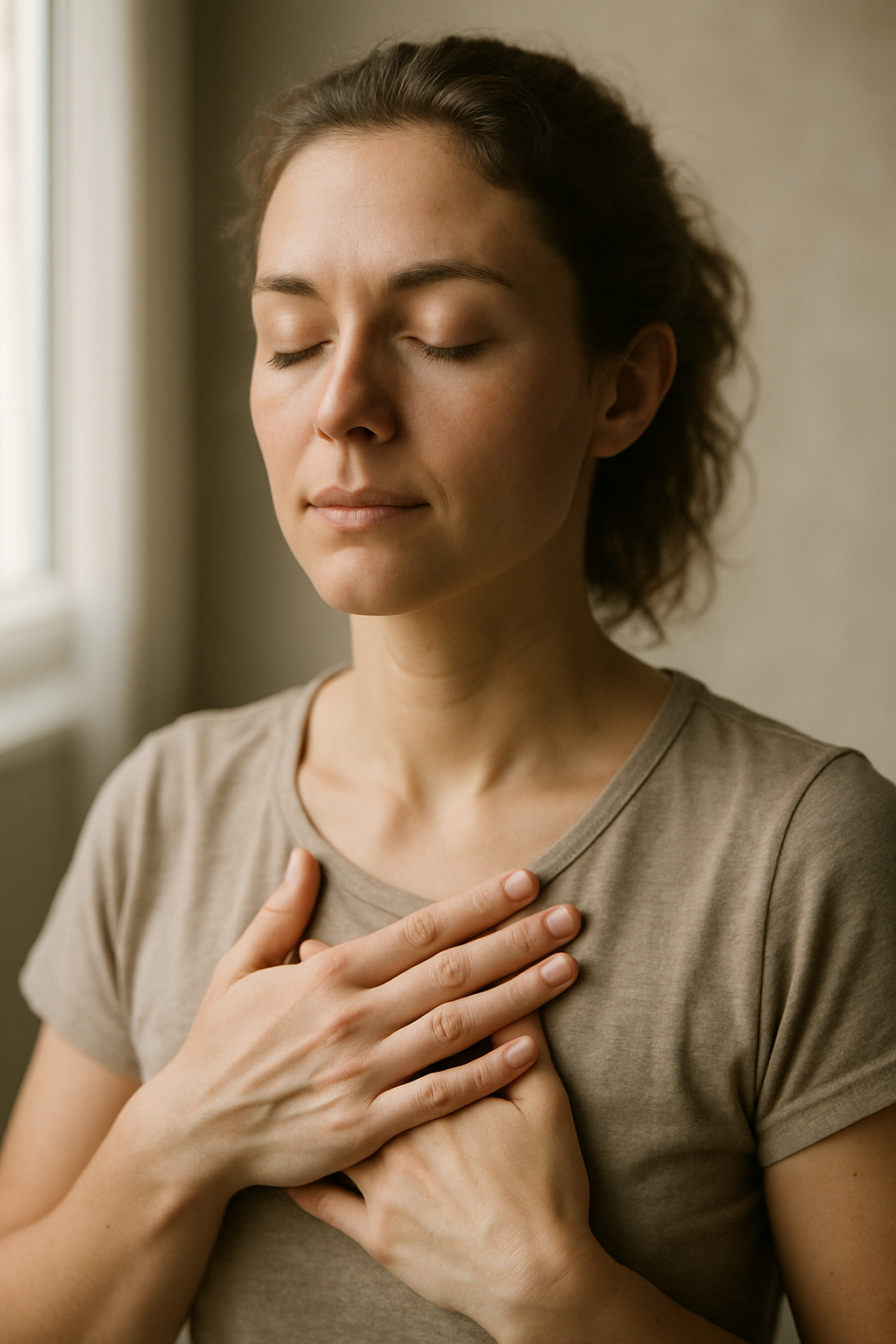
The vagus nerve innervates most of the visceral organs: heart, lungs, esophagus, stomach, intestines, liver, kidneys. It carries interoceptive information — the body's current state — up to the brainstem, where it terminates primarily in the nucleus tractus solitarius (NTS). The NTS then relays this information to limbic and cortical regions, including the amygdala and anterior insula, that construct emotional experience. In the predictive processing framework developed by neuroscientist Lisa Feldman Barrett, emotional states are partly generated from the brain's interpretation of these visceral signals. Poor interoceptive prediction — misinterpreting normal bodily sensations as threatening — is a proposed mechanism in anxiety and panic disorder.
Heart Rate Variability as a Proxy
The most commonly used non-invasive measure of vagal activity is heart rate variability (HRV). The vagus nerve tonically slows the heart through acetylcholine signaling at the sinoatrial node. When vagal activity increases (as during exhalation), heart rate drops; when it decreases (as during inhalation), heart rate rises. This beat-to-beat variation, quantifiable through ECG or modern wearables, reflects the responsiveness of the vagal brake on cardiac activity.
Higher resting HRV is robustly associated with better emotional regulation, lower anxiety trait scores, and greater resilience to acute stress across dozens of studies. A 2017 meta-analysis by Chalmers et al. in the International Journal of Psychophysiology, pooling data from 36 studies, found significantly lower resting HRV in individuals with anxiety disorders compared to healthy controls. The effect was consistent across anxiety subtypes including generalized anxiety disorder, PTSD, social anxiety, and panic disorder.
What the evidence does not support is the reverse causal claim that increasing HRV will necessarily reduce anxiety. The correlation between resting HRV and anxiety is solid; interventions designed to increase HRV (like slow paced breathing) reduce anxiety during the intervention, but the evidence for durable changes in trait anxiety through HRV-targeted training is considerably weaker. The distinction matters for managing expectations.
Slow Paced Breathing: The Best-Supported Intervention
Of all the "vagal stimulation" techniques promoted in wellness contexts, slow paced breathing (also called resonance frequency breathing or coherent breathing) has by far the most rigorous evidence base. The intervention typically involves breathing at approximately 6 breaths per minute — a 5-second inhale and 5-second exhale — which synchronizes respiratory and cardiovascular rhythms at a frequency that maximizes HRV amplitude.
A 2017 randomized controlled trial by Sakakibara and Hayano, published in Applied Psychophysiology and Biofeedback, found that daily slow-paced breathing practice for four weeks significantly increased resting HRV and reduced self-reported anxiety. A 2018 review in Frontiers in Human Neuroscience by Zaccaro et al. analyzed 15 studies and found consistent evidence that slow paced breathing reduces self-reported anxiety and improves HRV both acutely and after sustained practice. The 5-5 pattern appears close to optimal for most adults, though individual resonance frequencies vary slightly.
James Nestor's Breath covers the physiology of breathing and the evidence for slow-paced protocols in accessible detail. It's not a clinical text, but Nestor interviewed many of the relevant researchers and the science is presented responsibly.
Vagus Nerve Stimulation: The Clinical Context
Implanted vagus nerve stimulation (VNS) devices are FDA-approved for treatment-resistant depression and epilepsy. The mechanism for depression is believed to involve afferent vagal signals reaching noradrenergic and serotonergic nuclei (the locus coeruleus and raphe nuclei), which project widely throughout the cortex. Clinical trials show significant response rates in patients who haven't responded to antidepressants, though it takes months to reach full effect and response rates in the 30–40 percent range are typical in treatment-resistant populations.
Transcutaneous vagus nerve stimulation (tVNS) — non-invasive stimulation of the auricular branch of the vagus nerve at the ear — is actively researched but has not yet established an evidence base strong enough for regulatory approval in anxiety or depression in most jurisdictions. A 2021 systematic review in the Journal of Psychiatric Research found promising but inconsistent results across small trials. Effect sizes in anxiety-specific studies were modest.
Cold Exposure and the Dive Reflex
Cold water immersion to the face activates the mammalian dive reflex — a phylogenetically ancient response that triggers strong parasympathetic activation via the vagus, producing immediate bradycardia (slowing of heart rate). This is a real, robust physiological response. Splashing cold water on the face is actually used as a grounding technique in dialectical behavior therapy (DBT) for acute emotional dysregulation. Cold immersion research from Wim Hof-adjacent studies shows consistent HRV increases and cortisol reductions post-exposure, though study quality varies considerably and cold exposure as a standalone anxiety treatment is not established.
What "Vagal Tone" Actually Means
The term is used loosely in popular science to imply a stable trait that can be "built up" like a muscle. The underlying construct — resting vagal inhibitory influence on the heart — is real and measurable. But the idea that any single short-term intervention meaningfully raises your resting baseline tone is not well-supported. What the research more clearly supports is that regular slow-paced breathing practice, aerobic exercise, mindfulness meditation, and adequate sleep all maintain or modestly improve resting HRV over time.
Robert Sapolsky's Why Zebras Don't Get Ulcers remains the most thorough lay-accessible explanation of how the autonomic nervous system interacts with the stress response — including a clear-eyed account of what chronic sympathetic activation does to health over time. The vagus nerve section is excellent without the hype.
The practical upshot: slow paced breathing at 6 breaths per minute for 10–20 minutes daily is the highest-value, best-evidenced intervention in this space. It reduces acute anxiety measurably, has no side effects, costs nothing, and improves with practice. Jon Kabat-Zinn's Wherever You Go There You Are provides the mindfulness context that makes slow-paced breathing sustainable as a daily practice rather than a technique you try once and forget.
These are affiliate links — if you purchase, we earn a small commission at no cost to you. We only list products we've researched and believe in. Read our disclosure.