Top 5 Meditation Cushions: An Evidence-Informed Ranking

A meditation cushion does not make meditation effective. It solves a smaller, practical problem: helping the pelvis sit high enough that the spine can remain comfortable without forcing the hips or knees. That can reduce the amount of a session spent negotiating numbness, pressure, and posture.
There is no clinical trial proving that one consumer cushion produces better mindfulness outcomes than another. This ranking therefore does not pretend to be a medical comparison. We prioritized geometry, adjustable fill, stable materials, washable covers, credible dimensions, and whether a design suits a specific body or sitting style. Comfort is individual, so the “best” option is the one that lets you sit without pain or strain.
How to choose before you rank
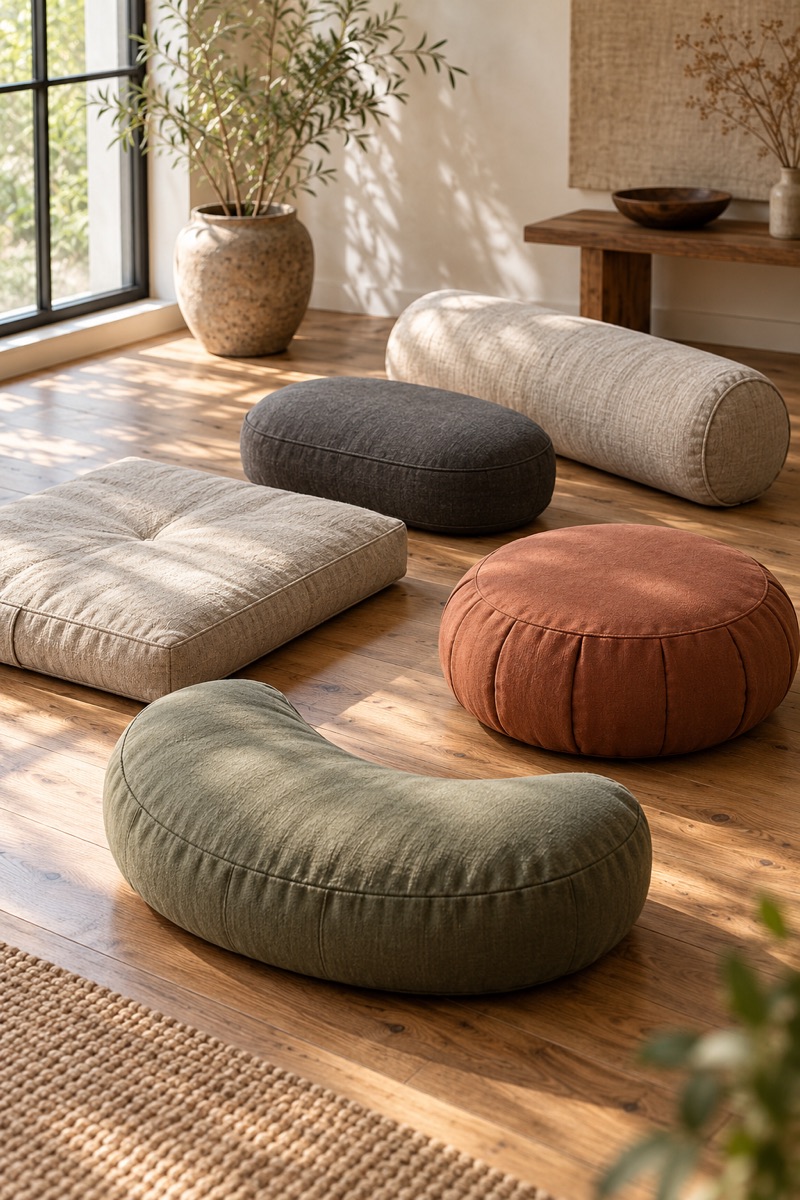
Sit cross-legged on a firm folded blanket. If the knees remain well above the hip creases and the lower back rounds, more height may help. If the knees drop comfortably and the pelvis feels stable, a lower cushion may be enough. Buckwheat hull fill conforms and can often be removed to tune height; dense cotton is lighter and quieter but less adjustable. A zabuton protects ankles and knees from a hard floor but does not replace pelvic elevation.
1Florensi Meditation Cushion — best overall value
The Florensi is a traditional round zafu about 16 inches wide and five inches high, with buckwheat hull fill and a removable velvet cover. Its main advantage is adjustability: adding or removing fill changes both height and firmness. The broad diameter suits many average-height users, while the washable cover makes it realistic for daily use.
The compromise is weight and warmth. Buckwheat cushions are not ideal for frequent travel, and velvet can feel warmer than plain cotton. Still, the combination of size, tunable support, and accessible price makes this the safest general recommendation.
2Bean Products Zafu and Zabuton — best complete floor setup
This two-piece approach pairs pelvic elevation with a larger mat under the knees and ankles. It is useful for people who are comfortable cross-legged but dislike direct pressure from wood or thin carpet. The zafu uses adjustable natural fill, and the zabuton creates a defined practice area without pretending to change biomechanics.
A set occupies more floor space and is inconvenient to move. It is also unnecessary if you already practice on a thick rug. Choose it for joint comfort and a permanent corner, not because two pieces are inherently more “advanced.”
3Brentwood Home Crystal Cove Oval — best low, wide support
The Crystal Cove uses an 18-by-13-inch oval footprint and about six inches of height, with removable buckwheat fill. The wider shape gives more contact under the sitting bones than a compact round zafu, and the certified organic cotton inner liner is a meaningful construction detail. Its outer cover is removable, and the carry handle is sturdy.
It is relatively heavy and expensive. The oval shape works well for cross-legged and side-sitting positions, but a very small user may find its footprint excessive. It ranks highly for materials and stable support rather than portability.
4Gaiam Yoga Bolster — best multipurpose option
A rectangular bolster is not a classic zafu, but it can support kneeling, restorative yoga, or a higher cross-legged seat. Its long surface distributes pressure and makes it useful in households where one prop must serve several practices. A washable zip cover and carry handle improve everyday practicality.
The tradeoff is precision. A bolster is less tailored to the pelvis, and its cotton fill is not as easy to tune as loose buckwheat. Choose it when versatility matters more than a compact meditation-specific shape.
5Gaiam Foldable Meditation Cushion — best for tight hips
This foldable design combines a broad square base with a built-in raised section. The large footprint protects ankles and offers more options for people who cannot comfortably settle onto a small round cushion. It is also easy to wipe clean and does not require arranging a separate mat and zafu.
It is bulky and less natural-feeling than a buckwheat cushion. The fixed geometry may be exactly what a stiff beginner needs—or an awkward mismatch. Buy it only when the dimensions solve a known problem.
Fit matters more than the ranking
When possible, buy from a seller that allows returns after an indoor trial. Test the cushion for 10 to 20 minutes in the posture you actually use, not a pose from the product photo. Your weight should feel centered on the sitting bones, the abdomen should not be compressed, and the knees should have support rather than hanging in tension. Remove a small amount of buckwheat at a time; lowering a cushion by even one inch can change pelvic position substantially.
What no cushion should promise
A cushion cannot correct persistent pain, create a “perfect” spine, or guarantee longer meditation. Tingling that resolves quickly after changing position is common; pain, weakness, or prolonged numbness is a reason to stop and reassess. A chair is a legitimate meditation seat, especially when floor sitting is uncomfortable. The practice is attention, not an audition for flexibility.
The honest bottom line
Start with height and adjustability, then consider floor protection, materials, and cleaning. Florensi is the most balanced single cushion; Bean Products is the strongest complete setup; Crystal Cove offers premium wide support; the two Gaiam designs serve multipurpose and limited-mobility use cases. None is universally best, and the right return policy matters almost as much as the fabric.
View on Amazon →
View on Amazon →
View on Amazon →
View on Amazon →
View on Amazon →
These are affiliate links. If you purchase, we may earn a small commission at no cost to you. We only list products we researched. Read our disclosure.