Sleep Reactivity: Why Stress Disrupts Some Sleep More Than Others

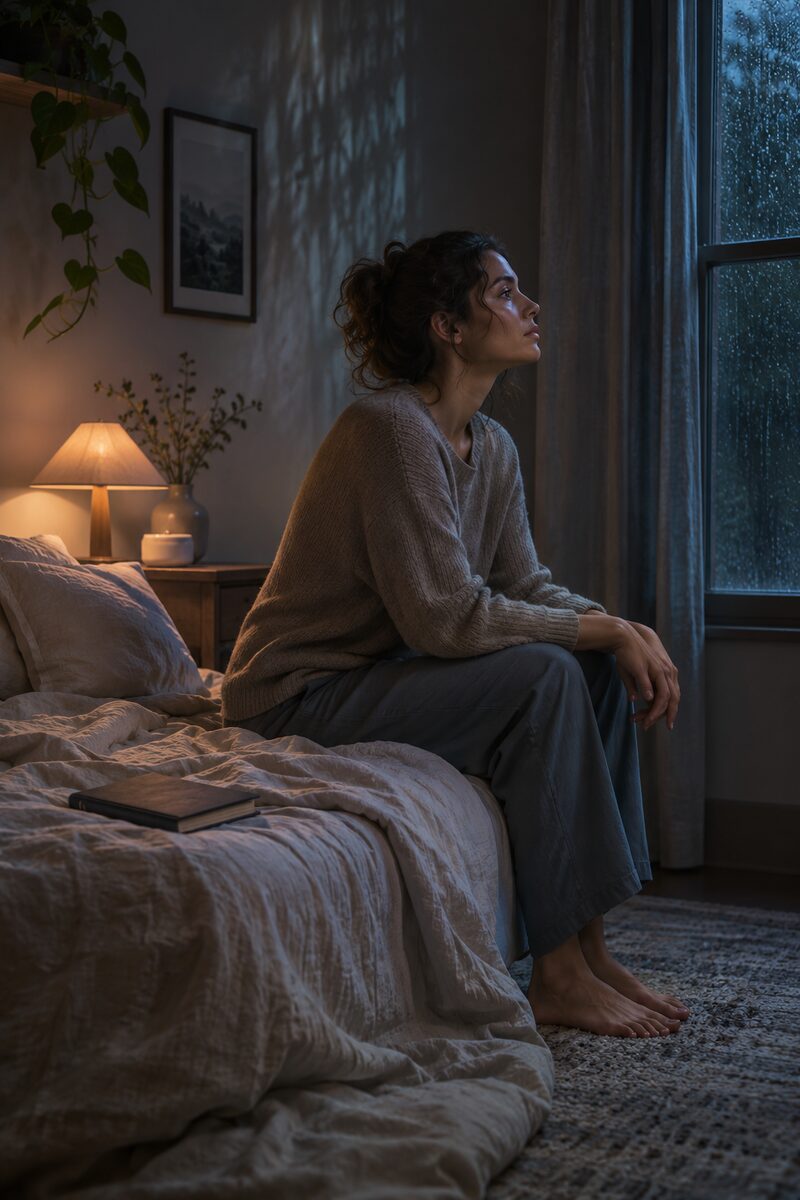
Two people can face the same deadline and sleep very differently. One falls asleep almost normally; the other lies alert, wakes repeatedly, or starts waking too early. Sleep reactivity is the tendency for stress to disturb the sleep system. It is not a diagnosis or a character flaw. It is a vulnerability that interacts with the intensity of stress, existing habits, biology, and context.
The concept matters because a reactive night can become a second problem. After stress disrupts sleep, fear of another bad night may add monitoring, clock-checking, and extra time in bed. Understanding the pattern can support earlier action without treating one difficult night as proof of chronic insomnia.
How researchers measure sleep reactivity
Most research uses the Ford Insomnia Response to Stress Test, or FIRST. The questionnaire asks how likely sleep is to become difficult after events such as conflict, public speaking, travel, or a demanding day. Higher scores indicate greater self-reported reactivity. The scale is useful for research and risk estimation, but it cannot diagnose insomnia, measure sleep architecture, or explain a particular night on its own.
A 2023 review of prospective studies found that high FIRST scores consistently predicted later insomnia symptoms, especially when people encountered real stress. Evidence also links sleep reactivity with circadian disruption and post-traumatic sleep problems. Much of that evidence is observational and self-reported, so it supports vulnerability—not a fixed destiny or a single causal mechanism.
A predisposition needs a trigger
The stress-diathesis model treats sleep reactivity as one part of a system. A predisposition may remain quiet until workload, grief, illness, conflict, travel, hormonal change, or another stressor raises arousal. Protective routines and recovery opportunities can soften the effect. Repeated stress, irregular schedules, or attempts to force sleep can amplify it.
Genetic studies suggest sleep reactivity is partly heritable, but genes do not dictate an outcome. The same score can lead to different experiences depending on timing, health, environment, and learned responses. It is more useful to ask, “What makes my system easier to settle during stress?” than to label yourself a bad sleeper.
Why stress remains active at night
Stress increases cognitive and physiological arousal. Thoughts rehearse unfinished problems; attention scans for threat; heart rate and muscle tension may remain elevated. Bed removes daytime distraction, so unresolved material can feel louder. A reactive sleeper may also start monitoring whether sleep is happening, which turns a natural process into a performance task.
Not every disrupted night requires intervention. Short-term sleep disturbance during a genuine crisis can be an understandable response. The concern is persistence: difficulty continues after the stressor eases, daytime function declines, or compensatory habits keep the cycle alive.
Protect the wake time, not perfection
During a stressful week, keep the morning anchor reasonably stable. Large sleep-ins and long naps can reduce sleep pressure the next night. This does not require minute-by-minute rigidity; a consistent range is enough. Seek morning light and ordinary daytime movement when possible, because both support circadian timing.
Create a short transition out of problem-solving. Ten minutes to write tomorrow’s first action, close open loops, and note what cannot be solved tonight can be more useful than an elaborate relaxation ritual. The goal is not to eliminate every thought. It is to stop treating bed as the place where all uncertainty must be resolved.
What to do when sleep does not arrive
If you are awake and frustrated, leave the bed for a quiet, dimly lit activity and return when sleepy. Avoid checking the clock repeatedly. One night is poor evidence about long-term health, and calculating the remaining hours usually increases urgency. Keep the next day safe and ordinary rather than launching a total sleep overhaul.
- Name the stressor in one sentence.
- Write one actionable step for tomorrow.
- Keep wake time within your normal range.
- Use caffeine strategically and avoid escalating late-day doses.
- Track daytime function for a week, not every minute of the night.
When self-management is not enough
Seek assessment when difficulty falling or staying asleep occurs at least several times a week, persists for months, or impairs daytime functioning. Cognitive behavioral therapy for insomnia is the first-line behavioral treatment for chronic insomnia. Loud snoring, gasping, restless legs, dangerous sleepiness, drowsy driving, mania symptoms, or medication and substance changes need individualized evaluation.
Trauma-related nightmares and severe anxiety also deserve professional support. Sleep advice should not become an instruction to endure unsafe circumstances or to perform unsupervised trauma exposure.
View on Amazon →
View on Amazon →
View on Amazon →
These are affiliate links. If you purchase, we may earn a small commission at no cost to you. We only list editions we researched. Read our disclosure.
The calm bottom line
Sleep reactivity describes vulnerability, not inevitability. Stress can disturb a sensitive sleep system, but stable timing, less nighttime problem-solving, and an early evidence-based response can keep a temporary reaction from becoming a long struggle. Judge patterns over time and seek care when symptoms persist or safety is affected.
Sources
Kalmbach et al., sleep reactivity review, 2023; Kalmbach et al., pathogenic sleep reactivity review, 2018; Drake et al., prospective insomnia-risk study, 2016; Jarrin et al., FIRST validation and insomnia risk, 2016.