
Seasonal Affective Disorder: What Light Therapy Actually Does
Psychiatrist Norman Rosenthal first described seasonal affective disorder in 1984 after noticing a recurring pattern in his own mood: low energy, oversleeping, carbohydrate cravings, and depressed mood that arrived every fall and lifted every spring. His team at the National Institute of Mental Health went on to run some of the first controlled trials of bright light as a treatment, and light therapy has remained the best-studied intervention for the condition ever since — not because it's the only option, but because it directly targets the mechanism believed to drive the disorder.
Why Light Regulates Mood
The retina contains photosensitive ganglion cells that respond specifically to light and project directly to the suprachiasmatic nucleus, the brain's master circadian clock. Reduced light exposure in fall and winter delays this internal clock relative to the actual clock time, a mismatch researchers call phase delay. In people vulnerable to SAD, this delay is thought to disrupt melatonin suppression timing and serotonin regulation, both of which are tightly linked to mood and alertness. Light therapy works by supplying the missing morning light signal directly, correcting the phase delay rather than treating mood symptoms in isolation.
The Evidence
A meta-analysis by Golden and colleagues, published in the American Journal of Psychiatry in 2005, pooled the available randomized controlled trials and found that bright light therapy produced effect sizes comparable to antidepressant medication for SAD, with response typically visible within one to two weeks — faster than most pharmacological options. A separate trial led by Kelly Rohan compared six weeks of light therapy against CBT adapted specifically for SAD and found both produced similar short-term improvement, but CBT patients had fewer recurrences in follow-up winters, suggesting the two approaches may be complementary rather than competing.
Dose, Timing, and Distance
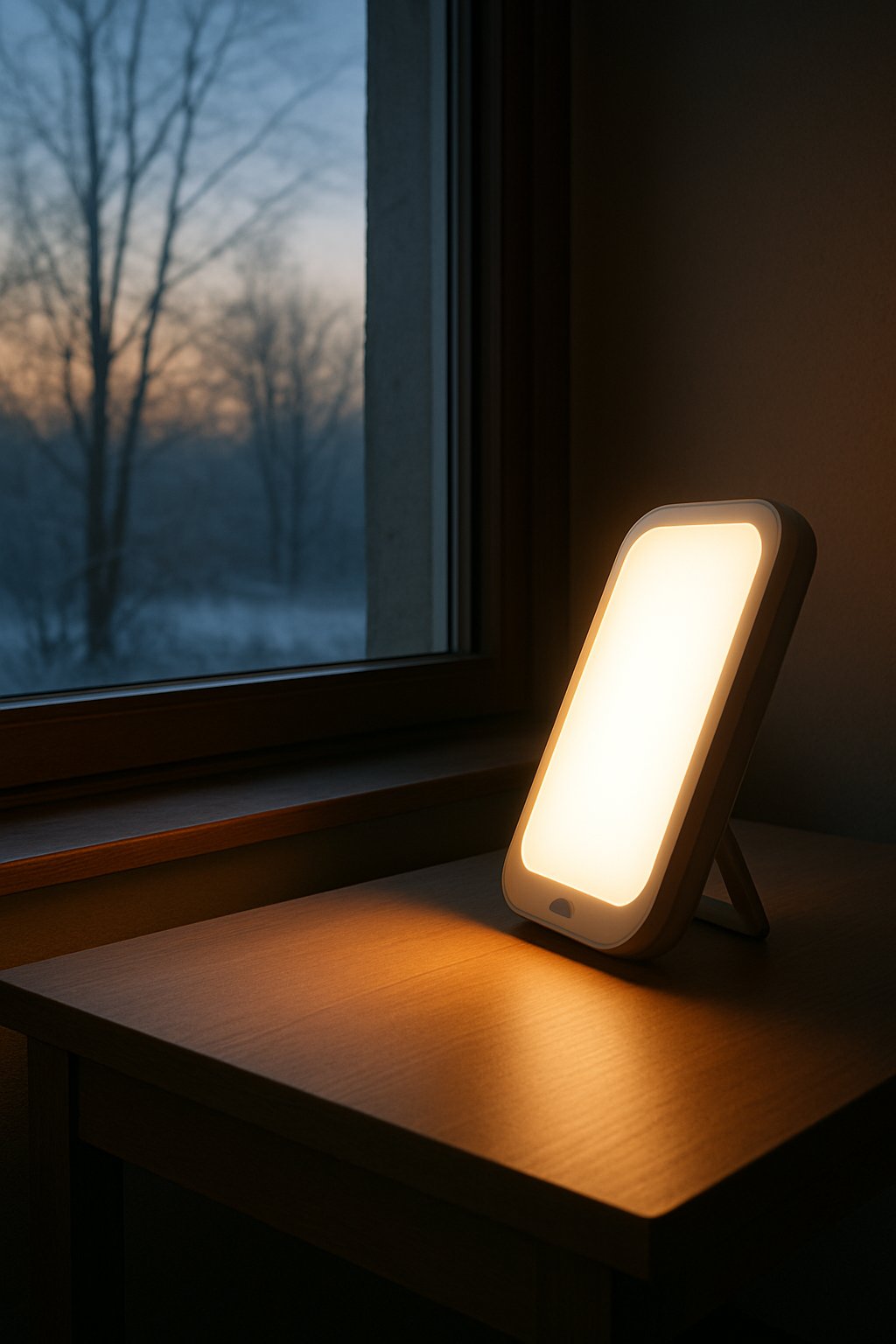
Clinical trials converge on 10,000 lux as the standard therapeutic intensity, used for 20 to 30 minutes each morning, ideally within an hour of waking. Lower-lux devices require proportionally longer exposure and are less consistently studied. Distance matters as much as the lamp's rated output: most 10,000-lux units are only accurate at 12 to 16 inches from the face, so a lamp placed across a room delivers a fraction of the intended dose. The light should enter peripheral vision rather than be stared into directly — reading, eating breakfast, or working at a desk with the lamp angled toward the face is the standard protocol.
Morning Versus Evening Light
Timing isn't interchangeable. Because the goal is correcting a phase delay, morning light is the evidence-backed default — it's what the original NIMH trials tested and what subsequent replications have confirmed. Evening light exposure can actually worsen phase delay in some people, pushing their internal clock later rather than earlier. Anyone unsure whether their pattern is a delay or advance may benefit from tracking sleep and mood timing for a week or two before starting, or from discussing timing with a clinician if symptoms are severe.
Who Should Be Cautious
Light therapy is not risk-free for everyone. People with bipolar disorder have a documented risk of light therapy triggering a switch into mania or hypomania, and should only use it under clinical supervision. People with certain retinal conditions or those taking photosensitizing medications should check with an ophthalmologist or prescriber first. For most people without these risk factors, side effects are limited to mild eye strain, headache, or nausea in the first few days, which typically resolve by reducing session length before building back up. Devices marketed for SAD should be UV-filtered — a genuine 10,000-lux therapy lamp filters out ultraviolet light, unlike an ordinary bright bulb.
These are affiliate links — if you purchase, we earn a small commission at no cost to you. We only list products we've researched and believe in. Read our disclosure.