
Red Light Therapy: What the Evidence Actually Supports
Red light therapy — also called photobiomodulation or low-level laser therapy (LLLT) — has moved from clinical settings to consumer devices over the past decade. The underlying mechanism is specific: photons at wavelengths between roughly 630 and 850 nanometers penetrate tissue and are absorbed by cytochrome c oxidase, a key enzyme in the mitochondrial electron transport chain. The result is increased ATP production, reduced oxidative stress, and a cascade of downstream cellular effects. That mechanism is not speculative — it has been replicated in thousands of cell and animal studies. The question is which human-level outcomes translate reliably.
The Mitochondrial Mechanism
Cytochrome c oxidase is the terminal enzyme in the mitochondrial respiratory chain, responsible for transferring electrons to oxygen and generating the proton gradient that drives ATP synthesis. Under conditions of metabolic stress or inflammation, nitric oxide competitively inhibits cytochrome c oxidase, reducing mitochondrial efficiency. Red and near-infrared light displace this nitric oxide inhibition, restoring normal electron transport function.
Two wavelengths have the strongest tissue penetration and cytochrome c absorption data: 660nm (red, visible, penetrates skin and superficial tissue) and 850nm (near-infrared, invisible, penetrates deeper into muscle and bone). The majority of home devices deliver both, and the research suggests they have complementary rather than overlapping effects. Devices should be selected on irradiance (power density in mW/cm²) rather than wattage alone — the dose of light delivered to tissue depends on both intensity and session duration.
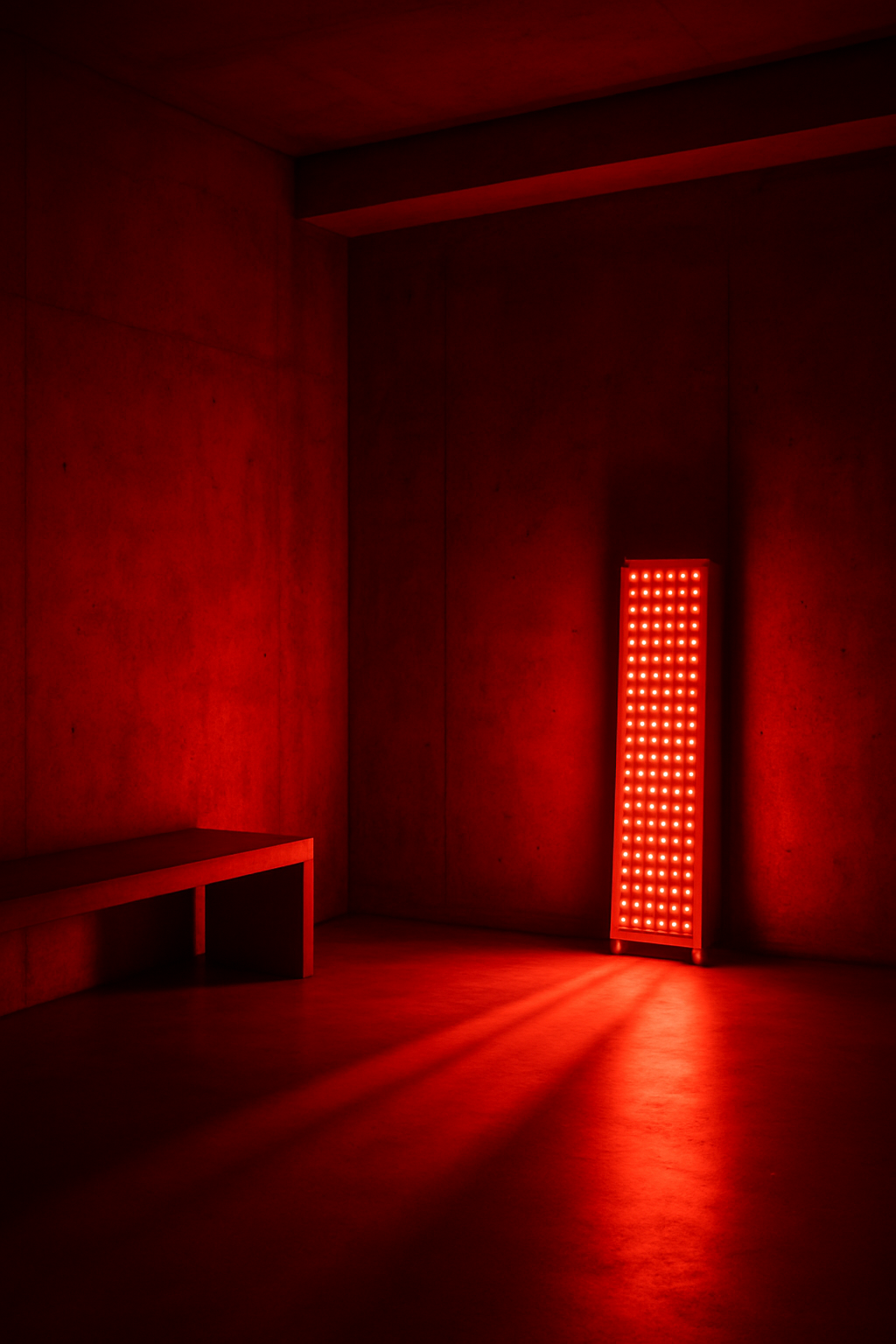
Skin: The Strongest Evidence Base
Skin research on red light therapy is the most developed and the most consistent. A 2014 randomized controlled trial published in Photomedicine and Laser Surgery found that participants receiving red light treatment over 30 sessions showed significant improvements in skin complexion, skin tone, collagen density (measured by ultrasound), and reduction in fine lines and wrinkles compared to control. The mechanism is direct: fibroblasts — the cells responsible for collagen synthesis — are particularly responsive to red light stimulation, with multiple studies documenting increased collagen I and III synthesis following exposure.
A 2013 study in the Journal of Photochemistry and Photobiology demonstrated that 633nm red light accelerated wound healing in a dose-dependent manner. For acne, blue light (415nm) is more effective than red, but red light reduces post-inflammatory redness and supports the healing phase. The evidence for red light in skin applications is strong enough that the FDA has cleared multiple devices for cosmetic skin improvement.
Muscle Recovery and Exercise Performance
The recovery application is where near-infrared wavelengths (850nm) show the most pronounced benefit. A 2016 meta-analysis in the European Journal of Sport Science examining 13 randomized controlled trials found that photobiomodulation applied before or immediately after exercise significantly reduced muscle soreness (DOMS), decreased creatine kinase levels (a marker of muscle damage), and improved performance in subsequent exercise sessions. The effect size was moderate to large across studies.
The mechanism in muscle tissue involves reduced inflammatory cytokine expression (IL-1β, TNF-α), increased mitochondrial biogenesis, and accelerated clearance of metabolic byproducts. Elite sports teams and professional athletes have used clinical-grade photobiomodulation devices for years; the current generation of home panels delivers comparable irradiance at lower cost, making the application accessible outside of clinical settings.
For those tracking training load or recovery with wearables, a full-body panel like the Hooga HG300 used for 10–20 minutes post-workout is one of the more evidence-supported recovery interventions available at the consumer level.
Mood, Brain, and Seasonal Effects
Transcranial photobiomodulation — red and near-infrared light applied to the skull — has generated genuine research interest, though the human evidence base here is earlier-stage. A 2017 randomized pilot study in Behavioral and Brain Functions found that a single session of near-infrared light applied to the forehead improved reaction time, memory, and sustained attention in healthy adults. The proposed mechanism involves improved mitochondrial function in prefrontal cortex neurons.
For seasonal affective symptoms, a separate line of evidence supports morning red light exposure as a complement to standard bright light therapy — red light is less suppressive of melatonin than full-spectrum white light, making early morning use compatible with circadian management. The evidence here is preliminary but biologically plausible.
What the Evidence Does Not Support
Many claims in the consumer red light market significantly outpace the evidence. Red light therapy has not been demonstrated to meaningfully reduce body fat in controlled trials, despite widespread marketing claims. The evidence for thyroid benefits, testosterone increases, and gut health improvements in humans is too thin or methodologically limited to make confident assertions. The field also suffers from a proliferation of underpowered studies and inconsistent dosing protocols, which makes cross-study comparison difficult.
Dosing matters more than most users realize. Too little light has no effect; too much can actually inhibit the targeted enzymes (the so-called biphasic dose-response, or Arndt-Schulz law). Effective doses in skin and muscle research typically fall between 3–50 J/cm², depending on tissue depth and outcome. A 10–20 minute session at 10–30 cm distance with a panel delivering 100+ mW/cm² will reach therapeutic doses for superficial tissue; deeper muscle recovery may require longer sessions or higher irradiance.
Device Selection
Key variables when evaluating devices: irradiance (verified by independent testing, not manufacturer claims), wavelengths (660nm and/or 850nm for the applications discussed), build quality, and EMF emissions. Smaller handheld devices like the Solawave facial wand deliver meaningful doses to small surface areas; full-body panels are necessary if muscle recovery is the primary goal. Panel-based devices should have a cooling fan to maintain stable LED output during sessions. Third-party irradiance testing data, when available from the manufacturer, is a reasonable quality signal.