
Potassium: The Overlooked Electrolyte for Blood Pressure and Muscle Function
Most conversations about blood pressure start and end with sodium. Cut the salt, the advice goes, and the numbers will follow. But a large body of research points to a factor that gets far less attention: potassium intake, and specifically the ratio between sodium and potassium in the diet. The average American consumes roughly 2,300mg of potassium a day — well under the 3,400–4,700mg range recommended by the National Academy of Medicine for most adults. That gap may matter more than salt restriction alone.
How Potassium Affects Blood Pressure
Potassium works through several mechanisms that directly counteract sodium's effect on blood vessels. It promotes sodium excretion through the kidneys (a natriuretic effect), relaxes vascular smooth muscle, and blunts the renin-angiotensin system that drives vasoconstriction. A 2013 Cochrane systematic review of 21 trials found that potassium supplementation reduced systolic blood pressure by an average of 3.49 mmHg in adults, with larger reductions in people who already had hypertension.
The sodium-to-potassium ratio appears to matter more than either mineral in isolation. The landmark PURE study, published in the New England Journal of Medicine in 2014 and following over 100,000 adults across 18 countries, found that a higher sodium-to-potassium ratio was more strongly associated with cardiovascular events and mortality than sodium intake alone. This lines up with earlier findings from the INTERSALT and INTERMAP cohort studies, both of which identified low potassium intake as an independent predictor of higher blood pressure across populations.
Muscle Function and the Sodium-Potassium Pump
Beyond blood pressure, potassium is central to how muscle and nerve cells generate electrical signals. The sodium-potassium pump (Na+/K+-ATPase) maintains the concentration gradient across cell membranes that makes muscle contraction and nerve conduction possible. When potassium runs low — a state called hypokalemia — that gradient is disrupted, which is why mild deficiency often shows up first as muscle cramping, weakness, or fatigue, particularly after exercise or heavy sweating.
This is also why endurance athletes and people who train in heat are frequently advised to prioritize potassium alongside sodium in recovery — sweat losses skew toward sodium, but potassium depletion compounds over multi-day training blocks and is easy to overlook.
Food First, Supplements With Caution
Potassium is unusual among minerals in that regulators actively limit supplement dosing. The FDA caps over-the-counter potassium supplements at 99mg of elemental potassium per serving — roughly 2–3% of the daily target — because rapid ingestion of high-dose potassium in pill form has been linked to cardiac arrhythmias, particularly in people with impaired kidney function. This is a real safety constraint, not a marketing quirk, and it means supplementation alone cannot close most people's potassium gap.
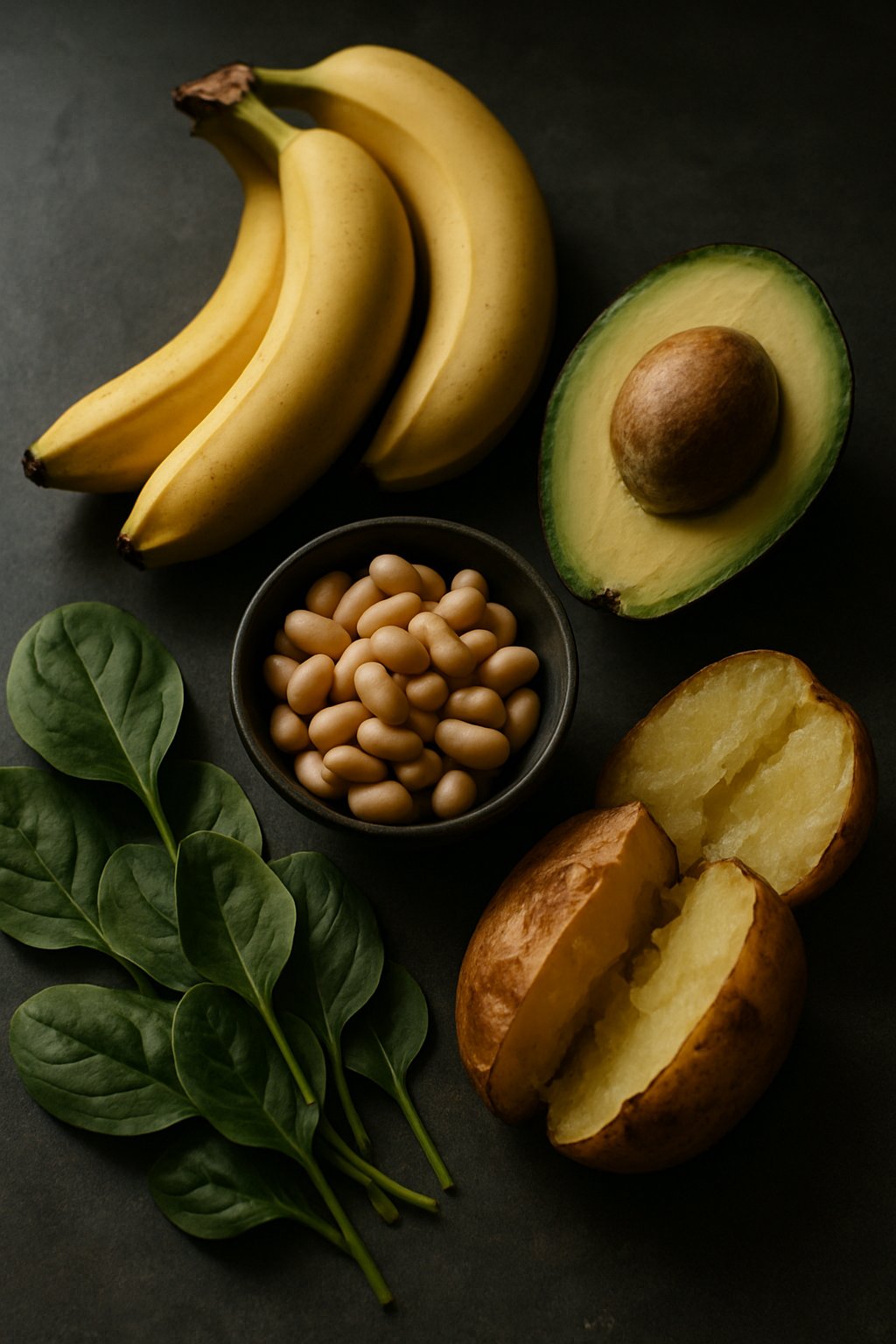
Food sources close the gap far more efficiently: a medium potato with skin has about 900mg, a cup of cooked spinach has around 840mg, white beans have roughly 1,000mg per cup, and a banana has about 420mg. For most healthy adults, closing the potassium gap is a plate-composition problem, not a supplement problem — low-dose potassium citrate can help at the margins, but it is not a substitute for potassium-dense food.
Who Should Be Cautious
People with chronic kidney disease, those taking ACE inhibitors, ARBs, or potassium-sparing diuretics, and anyone with a history of hyperkalemia should not increase potassium intake — through food or supplements — without medical guidance, since impaired kidney function prevents excess potassium from being cleared and can raise the risk of dangerous heart rhythm changes. If you're managing blood pressure with medication, talk to your prescriber before making significant dietary shifts, and consider tracking your numbers with a home monitor so any changes are measurable rather than assumed.
Practical Targets
For most healthy adults without kidney disease, aiming for 3,000–3,500mg of dietary potassium per day — mostly from vegetables, legumes, and fruit — alongside moderate sodium intake is the combination the evidence most consistently supports for blood pressure management. Dr. James DiNicolantonio's The Salt Fix covers the sodium-potassium relationship in more depth for readers who want the full physiological picture beyond what fits in a single article.
These are affiliate links — if you purchase, we earn a small commission at no cost to you. We only list products we've researched and believe in. Read our disclosure.