
Mediterranean Diet and Depression: What the Trials Show

Food cannot be reduced to a mood switch. Depression changes appetite, energy, planning, income, and the ability to cook, while those same constraints change diet. That two-way relationship makes nutrition research difficult and makes confident promises especially risky.
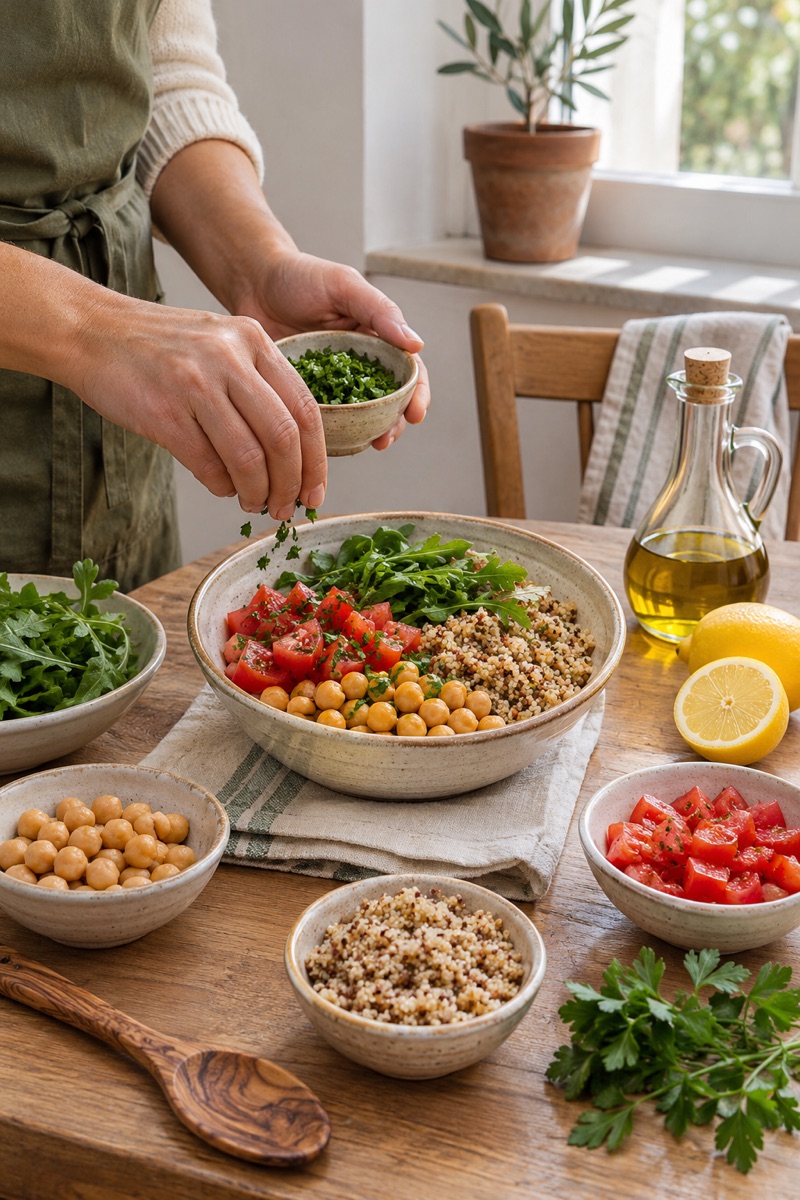
Still, a Mediterranean-style pattern is worth examining. It emphasizes vegetables, fruit, legumes, whole grains, nuts, olive oil, and fish, while limiting heavily refined foods and excess processed meat. Controlled trials have tested versions of this pattern as an addition to usual depression care. The results are promising in places, inconsistent overall, and not a reason to stop treatment.
The trial that changed the conversation
The 2017 SMILES trial randomized 67 adults with moderate-to-severe major depression to seven sessions of dietitian support or a matched social-support condition for 12 weeks. Most participants were already using psychotherapy, medication, or both. The dietary group showed a larger reduction in depression scores, and 10 of 31 completers met the study’s remission threshold versus 2 of 25 controls.
That is a meaningful signal, not a final verdict. The sample was small, participants knew which support they received, and remission counts were based on a modest number of people. The intervention also included repeated contact with a dietitian, so the result does not prove that handing someone a food list produces the same effect.
Why recent reviews disagree
A 2025 meta-analysis of five randomized trials reported a moderate pooled reduction in depressive symptoms, but heterogeneity was very high and the prediction interval crossed no effect. The authors rated certainty low. Another 2025 review, also based on five trials, found no statistically clear advantage against active or passive controls and rated most evidence very low certainty.
The apparent contradiction reflects analytic choices, outcome definitions, small trials, different control groups, and unstable estimates. It is a warning against presenting one pooled number as settled truth. A two-year PREDIDEP trial found no difference in depression recurrence, its primary outcome, although some symptom measurements favored the diet group at selected time points.
What the pattern may change
A Mediterranean-style pattern can improve overall diet quality and may support cardiovascular and metabolic health independently of mood. Possible pathways include micronutrient adequacy, fiber fermentation, inflammatory signaling, blood-glucose stability, and shared behavioral routines. These mechanisms are plausible but do not establish that one pathway caused a change in depression.
The most defensible interpretation is practical: improving diet may be a useful adjunct for some people, especially when support makes the change affordable and achievable. It is not an antidepressant substitute, and the evidence does not identify a precise menu, supplement, or biomarker that guarantees benefit.
A low-pressure four-part experiment
- Add a plant anchor. Put a vegetable, fruit, bean, or lentil into one repeat meal rather than rebuilding the whole day.
- Choose a durable fat. Use olive oil, nuts, or seeds where they fit, while keeping total energy and medical needs in view.
- Make protein easy. Keep beans, yogurt, eggs, fish, tofu, or another suitable option available for low-energy days.
- Protect convenience. Frozen vegetables, canned legumes, microwave grains, and tinned fish can be more realistic than idealized cooking.
Track feasibility, enjoyment, grocery cost, gastrointestinal comfort, and meal regularity for two weeks. Mood can be noted, but day-to-day fluctuation is too noisy to prove treatment success. The goal is to make a nourishing pattern easier, not to turn every meal into a psychiatric test.
Safety and access matter
Depression can create weight loss, bingeing, food restriction, substance use, or inability to shop and cook. In those situations, adequate intake and professional support come before dietary purity. People with eating disorders, diabetes treated with glucose-lowering medication, kidney disease, allergies, pregnancy, or other complex needs should seek individualized guidance.
If depression includes thoughts of self-harm, inability to care for basic needs, or rapid deterioration, food changes are not an emergency plan. Contact appropriate local emergency or crisis support and a qualified clinician. Continue prescribed treatment unless the prescriber changes it.
View on Amazon →
View on Amazon →
View on Amazon →
These are affiliate links. If you purchase, we may earn a small commission at no cost to you. We verified the listed editions. Read our disclosure.
The calm bottom line
Small trials suggest that supported Mediterranean-style eating may reduce depressive symptoms for some adults, while newer reviews show how uncertain the average effect remains. Use the pattern as an adjunct with broad health value: add accessible plant foods, keep protein and convenience visible, and judge the plan by whether it can survive difficult days. Depression deserves evidence-based care beyond the kitchen.
Sources
Jacka et al., SMILES randomized trial, 2017; Bizzozero-Peroni et al., randomized-trial meta-analysis, 2025; Tavakoly et al., systematic review and meta-analysis, 2025; Cabrera-Suárez et al., PREDIDEP trial, 2024.