
L-Theanine for Focus and Calm: The Neuroscience Explained
L-theanine is an amino acid found almost exclusively in tea leaves (Camellia sinensis) and certain mushrooms. It's the reason a cup of green tea produces a different kind of alertness than an equivalent dose of caffeine alone — calmer, more focused, without the edge. Researchers have been studying this compound since the late 1990s, and the mechanism is now well enough understood to be clinically applicable rather than just anecdotal.
The Alpha Wave Mechanism
L-theanine crosses the blood-brain barrier and begins influencing brain activity within 30 to 60 minutes of ingestion. Its primary measured effect is a dose-dependent increase in alpha brain wave activity — specifically in the 8–12 Hz range, which is associated with relaxed wakefulness and creative thinking. Alpha waves are typically suppressed during stress or concentrated cognitive effort; theanine appears to re-establish alpha activity without inducing theta waves (drowsiness).
A 2007 study in Clinical Neurophysiology conducted EEG measurements in 16 volunteers after 50mg and 200mg doses of L-theanine. Both doses produced significant alpha wave increases relative to placebo, with the effect concentrated in occipital and parietal regions. The 200mg dose produced a larger, more sustained response. Crucially, this occurred without sedation — reaction times and alertness scores were unchanged or slightly improved.
The Caffeine Combination
The most thoroughly researched application of L-theanine is its combination with caffeine. Caffeine blocks adenosine receptors to promote wakefulness, but it also increases heart rate, blood pressure, and cortisol — which partly explains the anxiety and jitteriness some people experience. L-theanine appears to modulate these side effects without blunting the cognitive benefits.
A 2008 randomized, double-blind, placebo-controlled trial in Nutritional Neuroscience tested four conditions: 50mg caffeine alone, 100mg theanine alone, the combination, and placebo. The combined condition outperformed all others on measures of speed and accuracy on attention tasks. Subjects in the combination group also reported significantly less headache and mental fatigue. The researchers concluded that the two compounds interact synergistically.
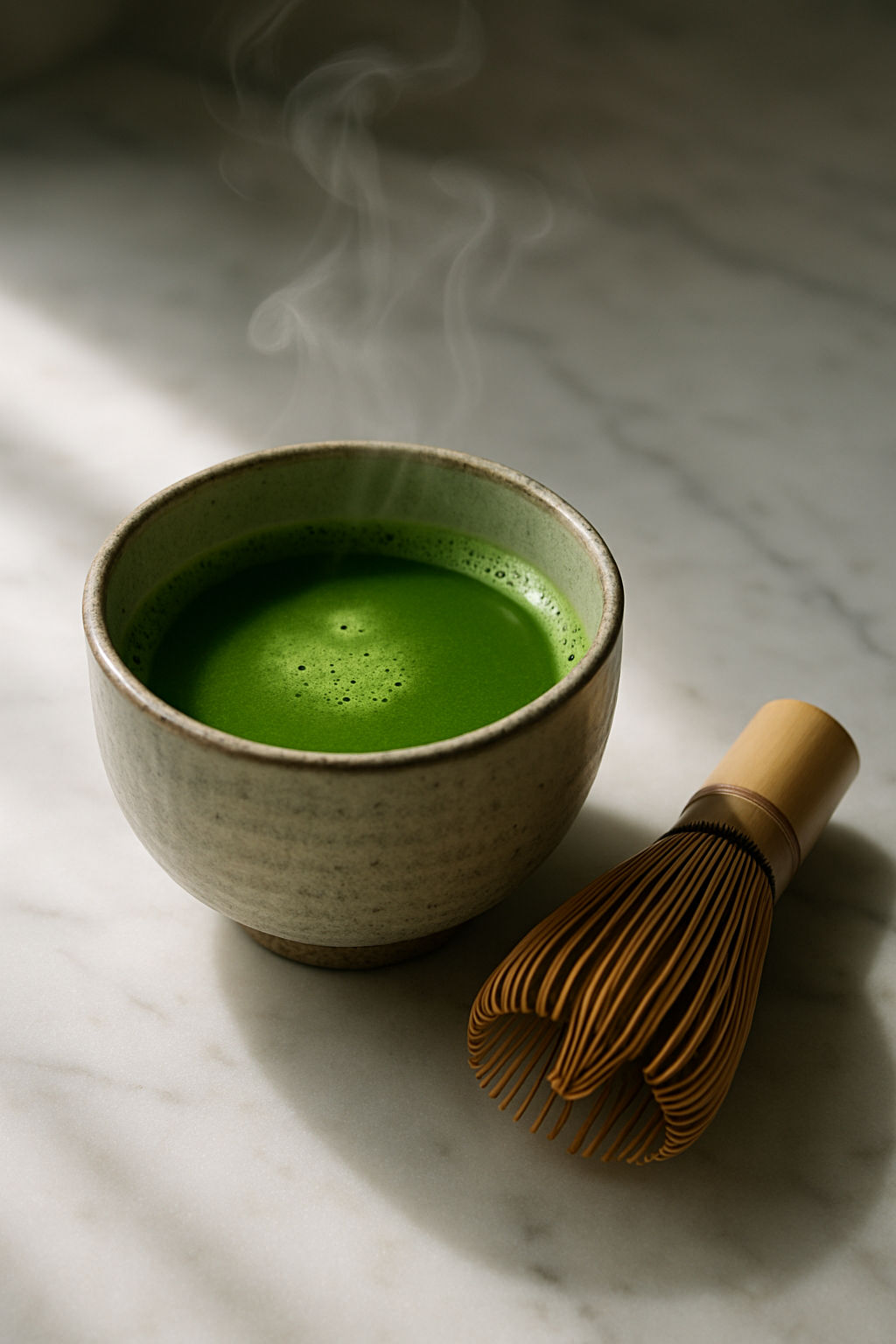
The typical ratio used in research is 2:1 theanine to caffeine (e.g., 200mg theanine with 100mg caffeine). A standard cup of matcha contains 34–68mg of caffeine alongside 20–46mg of L-theanine — this ratio is why matcha drinkers often describe its effect as more grounded than coffee. For a more concentrated dose, Thorne's L-Theanine capsules (200mg) are third-party tested and allow precise dosing alongside your coffee or espresso.
Stress and Anxiety
Beyond the caffeine interaction, L-theanine has measurable acute anxiolytic effects. A 2019 double-blind, crossover trial published in Nutrients enrolled 30 healthy adults under high-stress conditions and measured cortisol and salivary alpha-amylase (a sympathetic nervous system marker). The 200mg theanine condition produced significant reductions in both measures compared to placebo, alongside lower scores on the State-Trait Anxiety Inventory. The authors noted that effects were strongest in participants who reported high baseline anxiety sensitivity.
The mechanism here involves glutamate receptor antagonism — specifically AMPA, NMDA, and kainate receptors — combined with modest increases in GABA and glycine. This partially overlaps with how magnesium works, which is why the two are sometimes combined for sleep-onset support.
Matcha as a Dietary Source
Matcha offers the combined theanine-caffeine ratio in a food matrix that also provides EGCG (epigallocatechin gallate), a catechin with its own documented neuroprotective and anti-inflammatory properties. A 2017 randomized controlled trial in Food Research International found that matcha consumption improved speed of attention and working memory compared to placebo tea. Jade Leaf Ceremonial Grade Matcha is stone-ground from first-harvest Japanese leaves — the category where L-theanine concentration is highest.
Dosing and Practical Use
Research-supported doses range from 100 to 400mg, with most trials using 200mg. At this dose, onset is 30–60 minutes and duration is 3–5 hours. There is no meaningful tolerance development, making daily use practical. L-theanine has a very favorable safety profile — it's classified as GRAS (Generally Recognized as Safe) by the FDA. No drug interactions have been identified at standard doses, though combining with sedatives is theoretically additive.
For focus: take 200mg with your morning caffeine source. For anxiety or pre-sleep calm: take 200mg without caffeine in the evening. Nutricost L-Theanine 200mg (240 capsules) offers solid value for daily use, with transparent labeling and no proprietary blends. Both the morning and evening applications are well-supported by separate trial cohorts, which is relatively rare for a single compound.
These are affiliate links — if you purchase, we earn a small commission at no cost to you. We only list products we've researched and believe in. Read our disclosure.