
Heart Rate Variability: What HRV Actually Measures
Heart rate variability — the small, constantly shifting differences in time between consecutive heartbeats — has become a fixture on wearable dashboards, but most people never learn what the number is actually measuring. A resting heart rate of 60 beats per minute doesn't mean your heart fires exactly once per second. It fires at 0.98 seconds, then 1.03, then 0.95, and so on. HRV quantifies that variation, and it turns out to be one of the more useful non-invasive windows into how your autonomic nervous system is functioning.
What the Number Represents
Your heartbeat is governed by two branches of the autonomic nervous system pulling in opposite directions: the sympathetic branch, which speeds the heart up, and the parasympathetic branch, primarily through the vagus nerve, which slows it down. The two are constantly negotiating in real time. High variability between beats generally indicates a nervous system that can flexibly shift between states — alert when needed, recovered when it's not. Low, rigid variability tends to indicate a system stuck in sympathetic dominance, whether from stress, poor sleep, illness, or overtraining.
The most common metric consumer devices report is RMSSD (root mean square of successive differences), which specifically reflects parasympathetic, vagally-mediated activity. The Task Force of the European Society of Cardiology and the North American Society of Pacing and Electrophysiology established standardized HRV measurement protocols back in 1996, and RMSSD remains one of the more reliable short-term metrics for everyday tracking, according to a widely cited methodology review by Shaffer and Ginsberg published in Frontiers in Public Health in 2017.
Why It Correlates With So Much
A 2012 meta-analysis by Thayer and colleagues in Neuroscience & Biobehavioral Reviews linked higher resting HRV to better performance on tasks requiring the prefrontal cortex — the brain region responsible for executive function and emotion regulation. Their "neurovisceral integration" model proposes that the prefrontal cortex and the heart's autonomic control share overlapping neural circuitry, which is part of why chronic stress, poor emotional regulation, and low HRV tend to cluster together in the research literature.
This is also why HRV shows up as a proxy for recovery in athletic contexts. A body under-recovered from training, alcohol, illness, or sleep debt tends to show suppressed HRV the following morning, even before subjective fatigue is noticeable. It's not a perfect signal — day-to-day RMSSD is noisy and influenced by hydration, measurement position, and even the time you checked it — but tracked as a rolling weekly average, it correlates reasonably well with readiness.
What Actually Moves the Number
The best-supported intervention for raising HRV isn't a supplement — it's slow, paced breathing at roughly 4.5 to 6.5 breaths per minute, a practice known as resonance frequency breathing. A comprehensive review by Lehrer and Gevirtz in Frontiers in Psychology (2014) found that HRV biofeedback training at an individual's resonance frequency produced measurable improvements in both HRV and symptoms of anxiety and depression across multiple trials. The mechanism is mechanical as much as psychological: breathing at that pace maximizes the natural respiratory sinus arrhythmia, the rhythmic rise and fall of heart rate with each breath.
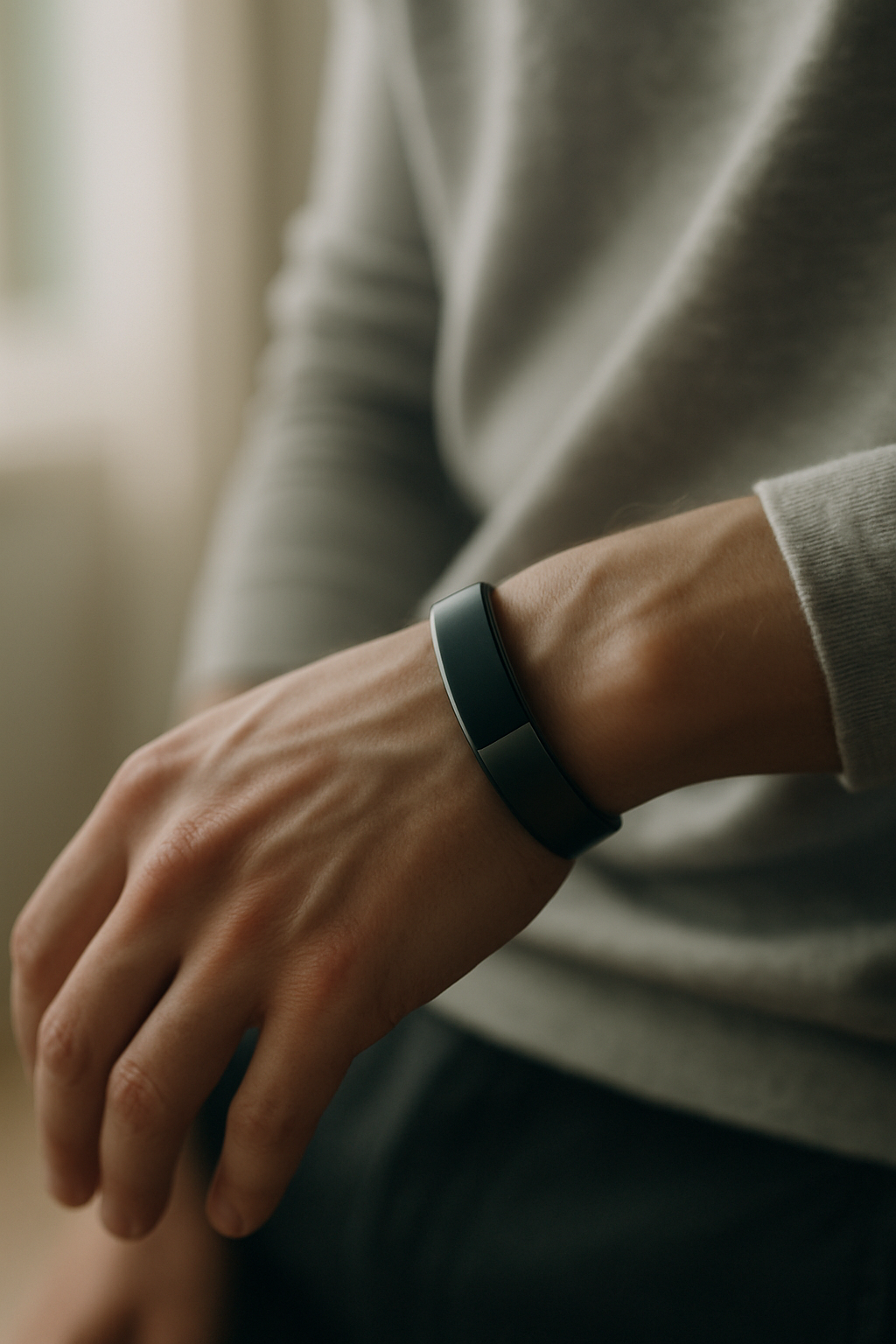
Aerobic exercise, consistent sleep timing, and reduced alcohol intake are the other reliably supported levers. A chest strap monitor like the Polar H10 captures raw electrical signal directly from the heart and is generally considered more accurate for HRV purposes than optical wrist sensors, which infer heartbeat timing from blood flow and are more prone to motion artifact. For passive daily tracking without a strap, ring-based devices such as the Oura Ring use nighttime readings, when the body is still, which tends to produce more consistent data than daytime wrist measurements.
Magnesium and Nervous System Recovery
Magnesium status is one of the more commonly overlooked contributors to autonomic balance. Magnesium modulates NMDA and GABA receptor activity, and chronic under-supplementation has been associated with heightened sympathetic tone in several small clinical studies. It won't move HRV as dramatically as breathing practice or sleep, but for people already running a magnesium deficit, correcting it is a reasonable low-risk lever alongside the behavioral changes that matter more.
What to Ignore
Don't compare your HRV number to anyone else's. RMSSD is highly individual — it depends on age, genetics, fitness level, and measurement method, and a device that reports "40ms" is not measuring the same thing as one reporting a normalized daily score out of 100. The only comparison that matters is your own trend over weeks, not your score on any single morning.
These are affiliate links — if you purchase, we earn a small commission at no cost to you. We only list products we've researched and believe in. Read our disclosure.