
The Gut-Brain Axis: What Your Microbiome Does to Your Mood
Approximately 95 percent of the body's serotonin is produced in the gut, not the brain. This single fact reframes a great deal of what we assume about mood regulation. The enteric nervous system — a network of roughly 500 million neurons lining the gastrointestinal tract — communicates bidirectionally with the central nervous system via the vagus nerve, the immune system, and the endocrine system. This pathway, collectively called the gut-brain axis, means that microbial activity in your intestines has documented, measurable effects on anxiety, stress reactivity, and baseline mood.
The science of psychobiotics — probiotics that exert mental health effects — is less than two decades old, but the research base is now substantial enough to move beyond anecdote. The Psychobiotic Revolution by Scott Anderson, John Cryan, and Ted Dinan provides the most rigorous synthesis of this literature available to a general audience, drawing on clinical trial data to map exactly which interventions have evidence and which don't.
The Mechanism: How Bacteria Signal the Brain
Gut bacteria communicate with the central nervous system through several distinct pathways. The vagus nerve — running from the brainstem to the abdomen — transmits signals from enteric neurons directly to the brain; roughly 80 percent of vagal fibers are afferent (bottom-up), meaning the gut sends far more information to the brain than the brain sends down. Bacteria influence this signaling by producing short-chain fatty acids (SCFAs), neurotransmitter precursors, and neuroactive compounds that modulate vagal activity.
The immune pathway is equally significant. Dysbiosis — an imbalance in microbial composition favoring harmful species — increases intestinal permeability, allowing bacterial fragments called lipopolysaccharides (LPS) to enter systemic circulation. LPS triggers a low-grade inflammatory response, and chronic neuroinflammation is now a well-documented feature of both major depression and generalized anxiety disorder. A 2019 meta-analysis in Brain, Behavior, and Immunity found that inflammatory markers — specifically CRP and IL-6 — were consistently elevated in individuals with anxiety disorders compared to healthy controls.
The SMILES Trial and Dietary Evidence
The most rigorous direct test of diet-to-mood effects came from the SMILES (Supporting the Modification of lifestyle In Lowered Emotional States) trial, published in BMC Medicine in 2017. Researchers randomized 67 adults with major depressive disorder to either a Mediterranean-style dietary intervention or social support as a control. After 12 weeks, 32 percent of the dietary group achieved remission compared to 8 percent of the social support group. The dietary group consumed significantly more vegetables, legumes, whole grains, and fermented foods — all substrates and sources for beneficial microbial populations.
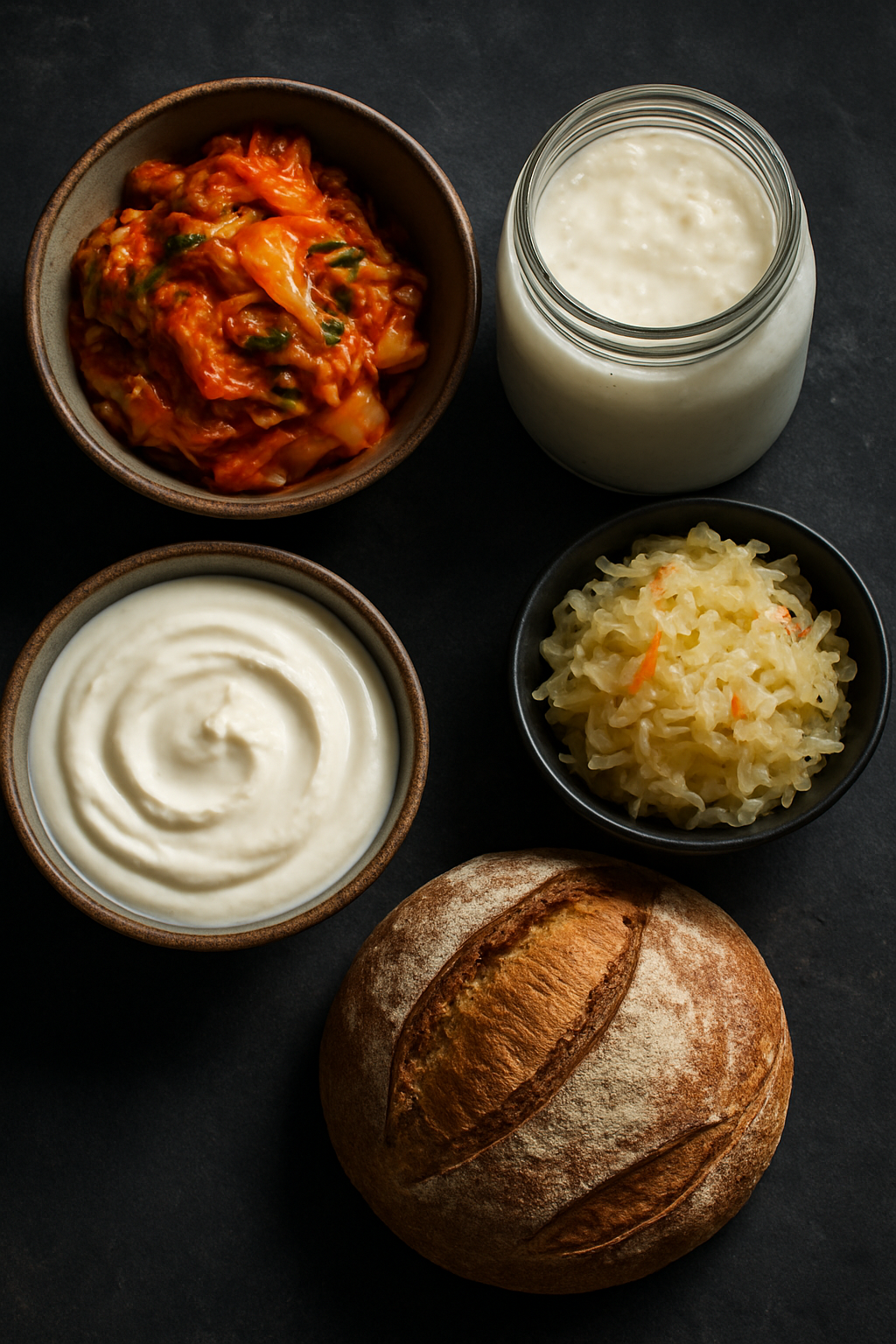
Fermented foods specifically have mechanistic support. A 2021 randomized trial in Cell found that a high-fermented-food diet (including yogurt, kefir, fermented vegetables, and kimchi) increased microbiome diversity and decreased markers of immune activation over ten weeks. Microbiome diversity correlates consistently with resilience to stress and mental health stability across large observational studies.
Probiotic Supplementation: What the Evidence Actually Shows
Probiotic research in mental health is inconsistent — partly because effects are strain-specific, and most consumer products don't contain the strains studied in trials. The most replicated findings involve Lactobacillus rhamnosus (JB-1) for anxiety reduction in animal models (the human translation is still pending robust trials) and Bifidobacterium longum 1714, which reduced stress reactivity in a 2016 randomized controlled trial published in Translational Psychiatry.
Multi-strain probiotic products with higher CFU counts — like Garden of Life Dr. Formulated Probiotics (50 Billion CFU) — are a pragmatic choice when specific therapeutic strains aren't the goal, and when the primary objective is general microbiome support alongside a dietary intervention. The research does not support probiotics as a standalone mood treatment; they perform best as one component of a broader dietary and lifestyle strategy.
Prebiotics: Feeding What's Already There
Probiotics introduce bacteria. Prebiotics feed the ones you already have — specifically the beneficial species that produce SCFAs and maintain intestinal barrier integrity. Inulin-type fructooligosaccharides (FOS) are the most studied class of prebiotic for mood-related outcomes. A 2015 randomized controlled trial in Psychopharmacology found that a daily prebiotic (galactooligosaccharides) reduced cortisol awakening response and attentional bias toward negative stimuli — both markers of anxiety — relative to placebo after three weeks.
Dietary sources include chicory root, Jerusalem artichoke, leeks, onions, and garlic. Supplemental inulin powder — such as NOW Foods Organic Inulin — provides a practical way to hit therapeutic-range doses (5–10g daily) that are difficult to achieve consistently through diet alone. Inulin has a mild sweetness and dissolves in cold liquids, making it easy to add to smoothies or water.
The Stress-Dysbiosis Loop
Psychological stress impairs gut microbiome composition through multiple pathways: it reduces intestinal transit time, alters secretory IgA levels that protect mucosal surfaces, and activates the HPA axis in ways that increase cortisol exposure to gut tissue. Cortisol directly suppresses populations of Lactobacillus and Bifidobacterium — the genera most associated with anxiolytic effects.
This creates a bidirectional feedback loop. Stress degrades the microbiome; a degraded microbiome increases stress reactivity and inflammatory signaling; increased inflammation amplifies HPA axis activation. Breaking this cycle requires simultaneous intervention at multiple points: stress management, sleep (which independently regulates both cortisol and microbiome composition), dietary fiber intake, and where appropriate, targeted probiotic supplementation.
What the Evidence Does Not Support
The mechanistic research is compelling, but clinical translation remains partial. No probiotic supplement has been approved as a treatment for any psychiatric condition. Effect sizes in most human trials are modest. The microbiome is highly individual — interventions that shift composition in one person may have minimal effect in another. And the long-term stability of microbiome changes induced by supplements, once discontinued, is not established. The most durable interventions in the human literature are consistently dietary: high fiber, high fermented food, low ultra-processed food — sustained over months, not weeks.
These are affiliate links — if you purchase, we earn a small commission at no cost to you. We only list products we've researched and believe in. Read our disclosure.