
The Neuroscience of Flow State: How to Enter and Sustain It
Psychologist Mihaly Csikszentmihalyi spent decades interviewing surgeons, chess grandmasters, rock climbers, and factory workers about their most satisfying experiences. The descriptions were remarkably consistent: complete absorption in a task, loss of self-consciousness, a distorted sense of time, and an intrinsic sense that the activity was worth doing for its own sake. He called this state "flow" — and his foundational book on the subject remains one of the most cited works in positive psychology.
What Csikszentmihalyi identified phenomenologically, neuroscientists have since mapped mechanistically. Flow is not a mystical state — it has a specific neural signature, reproducible conditions, and measurable outputs. Understanding those conditions allows you to engineer flow more deliberately, rather than waiting for it to appear by accident.
What Happens in the Brain During Flow
EEG studies show that flow correlates with increased theta wave activity (4–8 Hz) in frontal regions — the same brainwave pattern associated with REM sleep dreaming and deep meditative states. At the same time, there is a marked reduction in activity in the prefrontal cortex, particularly in areas responsible for self-monitoring and explicit planning. Neuroscientist Arne Dietrich termed this "transient hypofrontality": a temporary downregulation of the brain's critical, self-evaluating circuitry.
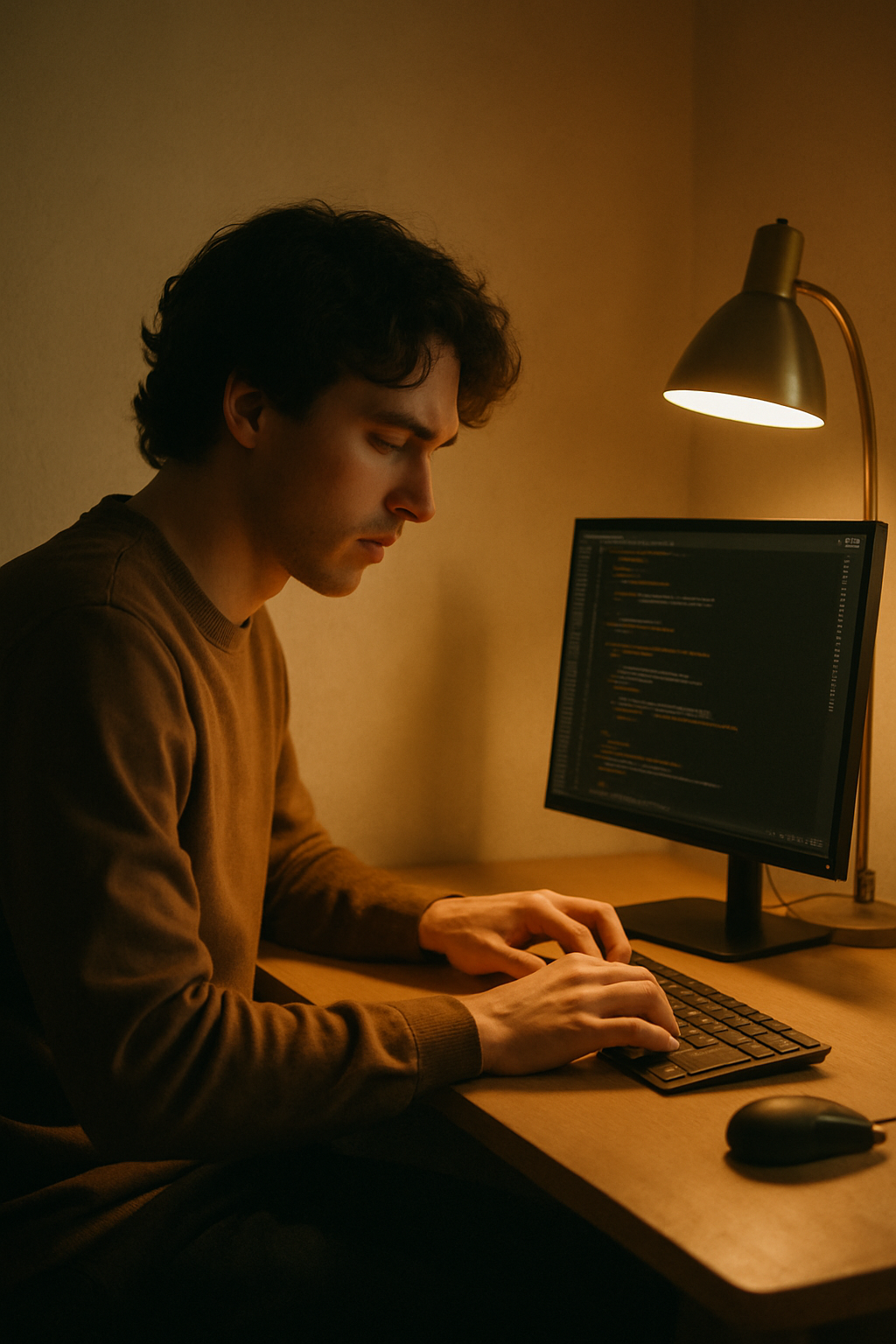
This explains two of flow's most distinctive features. The inner critic goes quiet because the neural substrate generating it is suppressed. And performance often improves because the brain shifts from slow, deliberate processing to faster, pattern-based execution — drawing on deeply encoded skill without conscious interference.
Neurochemically, flow appears to involve a cocktail of dopamine, norepinephrine, serotonin, anandamide, and endorphins, all released in elevated concentrations. A 2011 study published in Frontiers in Human Neuroscience found that norepinephrine and dopamine together sharpen attention and elevate the signal-to-noise ratio in neural processing — reducing distractibility while increasing the salience of task-relevant information.
The Challenge-Skill Balance
The most robust empirical finding in flow research is the challenge-skill ratio. Flow requires that perceived task difficulty slightly exceed your current skill level — typically by around 4 percent above your comfort threshold, according to research by flow researcher Steven Kotler. Too easy, and the task produces boredom and mind-wandering. Too hard, and anxiety blocks the state entirely. The optimal zone is a narrow band of productive discomfort.
This is why flow is difficult to access in routine work and nearly impossible during genuinely novel or overwhelming tasks. Csikszentmihalyi's original data showed that activities people had practiced for years — crafts, sports, musical performance — produced flow far more reliably than intellectually stimulating but unfamiliar activities. Expertise creates the high-resolution skill map that flow states navigate.
Preconditions: What You Need Before You Start
Flow does not emerge from willpower. It emerges from conditions. The research literature identifies several structural requirements that make flow possible.
Clear goals
Ambiguity is the enemy of flow. Before beginning a session, the task must be defined precisely enough that you know what "done" looks like — or what the next concrete action is. Vague goals like "work on the project" generate a constant low-level demand for metacognitive decision-making that prevents immersion. Specific goals like "draft the introduction section" remove that overhead.
Immediate feedback
Flow requires a feedback loop. The brain needs to register progress continuously — not after the task is complete, but moment to moment. Coding provides natural feedback (the program runs or it doesn't). Writing provides less, which is why many writers find structured output goals (word counts, sections completed) more effective than time-based sessions. Physical skills provide it automatically through proprioception and visible results.
Undivided attention window
A 2001 study by Gloria Mark at UC Irvine found that interruption costs extend well beyond the interruption itself — it takes an average of 23 minutes to return to deep engagement after being pulled away. Flow states require protection via time-blocking. Most researchers recommend sessions of 90–120 minutes as optimal for deep cognitive work, corresponding to the body's natural ultradian rhythm cycles.
The Role of Environmental Design
Auditory environment significantly affects flow access. A 2012 study in the Journal of Consumer Research found that moderate ambient noise (around 70 dB) — comparable to a coffee shop — enhanced creative performance relative to both silence and loud environments. The mechanism appears to involve mild distraction-induced abstract processing. For analytical tasks, however, silence or consistent low-level noise without meaningful verbal content performs better. High-quality noise-cancelling headphones like the Sony WH-1000XM5 are a practical tool for eliminating the unpredictable acoustic interruptions — voices, notifications, traffic spikes — that reliably break concentration before it reaches depth.
Phone notifications deserve specific mention. A 2017 study in the Journal of Experimental Psychology found that receiving a text notification — even without reading it — produced levels of distraction comparable to answering a call. The cognitive cost of potential interruption is incurred the moment the device is noticed as a presence, not only when it is actually used. Physical separation from the device during intended flow sessions is more effective than notification silencing.
Time-Boxing and the Entry Ritual
Flow states typically require 15–20 minutes of sustained attention before they fully engage. This latency period is where most people abandon the attempt — it feels unpleasant, distracted, and unproductive. The discomfort is a normal feature of the entry process, not a signal that flow won't come. Committing to a defined work interval removes the decision whether to continue, which itself consumes cognitive resources.
A visual timer — rather than a phone timer — keeps you anchored to the session without requiring you to look at a device. The Time Timer MOD is built specifically for this: a silent, visual countdown that makes the remaining session time immediately legible without requiring a screen interaction. It removes one more friction point from the entry process.
Recovery Between Flow Sessions
The neurochemical depletion after a flow state is real. Kotler's research suggests that a deep 90-minute flow block typically requires an equivalent period of genuine rest — not passive scrolling, but actual low-stimulation recovery — before another flow state of comparable depth is accessible. Attempting back-to-back deep sessions usually results in a qualitatively shallower second session and degraded performance across the afternoon.
Sleep is the primary recovery mechanism for the neurotransmitter systems involved in flow. Inadequate sleep specifically impairs dopamine signaling — which means chronic sleep restriction progressively erodes flow capacity regardless of environmental conditions or motivation.
These are affiliate links — if you purchase, we earn a small commission at no cost to you. We only list products we've researched and believe in. Read our disclosure.