
Berberine and Metabolic Health: What the Research Actually Shows
Berberine is a plant alkaloid found in barberry, goldenseal, and Oregon grape that has been used in Chinese and Ayurvedic medicine for centuries. Over the past two decades, it has accumulated one of the more impressive bodies of clinical evidence among non-prescription metabolic compounds — particularly for blood glucose regulation, insulin sensitivity, and lipid profiles. The comparison to metformin that circulates in wellness circles is not without basis, though the nuances matter.
The Primary Mechanism: AMPK Activation
Berberine's primary metabolic action is the activation of AMP-activated protein kinase (AMPK), an enzyme that functions as a cellular energy sensor. When AMPK is activated, it increases glucose uptake into cells, improves insulin receptor sensitivity, inhibits hepatic gluconeogenesis (glucose production in the liver), and shifts metabolism toward fat oxidation. This is the same pathway activated by metformin, caloric restriction, and exercise — which is why berberine is often described as an exercise mimetic in the metabolic literature.
A landmark 2008 study in Metabolism by Zhang et al. compared berberine (500mg three times daily) to metformin (500mg three times daily) in 36 adults with type 2 diabetes over three months. Both groups showed equivalent reductions in HbA1c (berberine: −2.0%, metformin: −1.8%), fasting glucose (berberine: −7.0 mmol/L, metformin: −5.7 mmol/L), and postprandial glucose. The berberine group showed an additional advantage in lipid reduction, with significant decreases in total cholesterol and triglycerides not seen in the metformin group.
Effects on Insulin Sensitivity
Insulin resistance — the state in which cells require progressively more insulin to take up the same amount of glucose — underlies type 2 diabetes, metabolic syndrome, and a growing body of evidence links it to cognitive decline and cardiovascular disease. Berberine appears to improve insulin sensitivity through at least three complementary mechanisms: AMPK activation, upregulation of insulin receptor expression, and modulation of the gut microbiome toward species associated with better glucose metabolism.
A 2012 meta-analysis in Journal of Ethnopharmacology pooling 14 randomized trials (n=1068) found berberine significantly reduced fasting blood glucose (mean reduction: 1.07 mmol/L), HbA1c (mean reduction: 0.72%), and postprandial glucose (mean reduction: 2.14 mmol/L) compared to placebo. Effect sizes were comparable to oral hypoglycemic drugs. The review noted that berberine performed best in trials using 500mg doses taken with meals — a dosing pattern consistent with AMPK's role as a postprandial metabolic regulator.
Lipid Profile Effects
The lipid-lowering effects of berberine are mechanistically distinct from statins. Rather than inhibiting HMG-CoA reductase (the statin target), berberine upregulates LDL receptor expression in the liver by stabilizing LDL receptor mRNA — a pathway identified in a 2004 Nature Medicine study by Kong et al. This means berberine's lipid effects are additive with statins rather than redundant, a finding with potential clinical significance for combination therapy.
In practice, clinical trials have consistently shown reductions in total cholesterol (10–20%), LDL-C (15–25%), and triglycerides (20–35%) with berberine supplementation at 500–1500mg daily. A 2015 systematic review in PLOS ONE covering 27 randomized controlled trials confirmed these reductions with high consistency across different populations.
Gut Microbiome Effects
Berberine has poor oral bioavailability — only about 5% of an oral dose reaches systemic circulation. For years, this was considered a pharmacological limitation. More recent research suggests it may actually be part of the mechanism. Berberine exerts significant effects on the gut microbiota directly, enriching short-chain fatty acid–producing bacteria (Lactobacillus, Bifidobacterium) and reducing pathogenic gram-positive bacteria.
A 2020 study in Cell Metabolism demonstrated that germ-free mice — lacking gut bacteria — showed dramatically attenuated metabolic responses to berberine, suggesting the microbiome mediates a substantial portion of its effects. This has implications for who responds to berberine: individuals with dysbiotic gut microbiomes (from antibiotic use, processed-food diets, or chronic stress) may show weaker initial responses that improve as the microbiome shifts.
Dosing and Practical Considerations
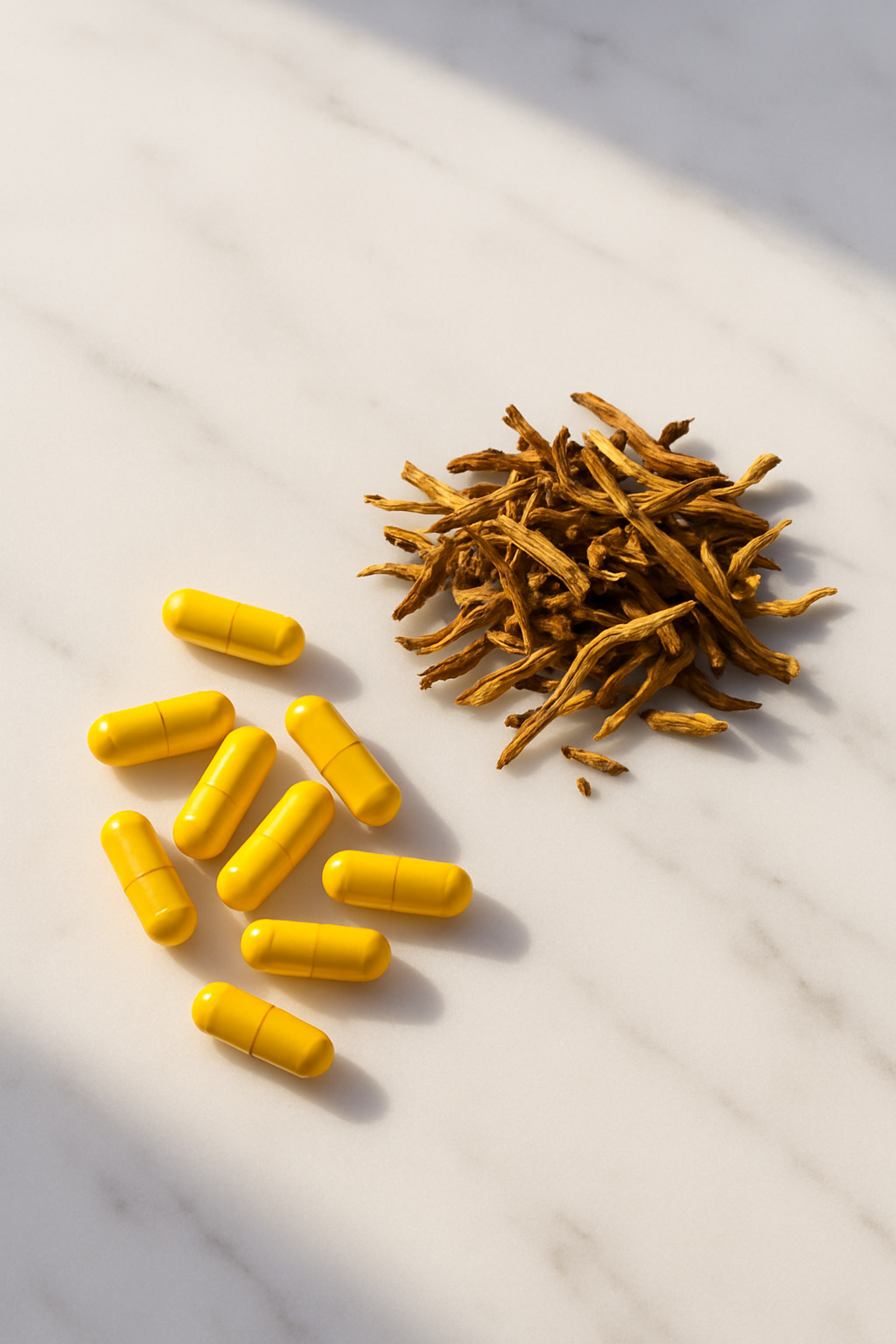
The most clinically studied dose is 500mg taken two to three times daily with meals. Taking berberine with food blunts the gastrointestinal side effects (nausea, loose stools) that occur in a minority of users and aligns dosing with the postprandial AMPK activation window where effects are strongest. Double Wood's berberine HCl 500mg capsules are third-party tested for purity and provide the exact dose used in the majority of clinical trials.
For those sensitive to higher doses, starting at 500mg once daily and titrating over two to three weeks is a practical approach. NatureBell's 97% pure berberine HCl uses a 5:1 root extract standardized for alkaloid content — useful for individuals who want to verify bioactive concentration rather than relying on weight-based claims alone.
Contraindications and Interactions
Berberine has meaningful drug interactions that are underreported in popular coverage. It inhibits cytochrome P450 enzymes (particularly CYP3A4 and CYP2D6), which metabolize a large number of pharmaceutical drugs including statins, certain antidepressants, and immunosuppressants. Combined use of berberine with metformin amplifies glucose-lowering effects and can cause hypoglycemia — a risk that matters in diabetic populations on medication. Anyone on prescription drugs should consult a clinician before using berberine.
The broader point — that food choices, meal timing, and postprandial glucose patterns matter enormously for metabolic health — is laid out accessibly in Jessie Inchauspé's Glucose Revolution, which translates continuous glucose monitor data into practical dietary strategies. The science is compatible with berberine supplementation as an adjunct to the food-first approaches she describes.
Who Benefits Most
The clinical evidence is strongest for adults with prediabetes, metabolic syndrome, or type 2 diabetes. Evidence for benefits in metabolically healthy adults is thinner, though the lipid effects appear across populations. The gut microbiome modulation adds a layer of benefit that may extend beyond traditional metabolic markers — an area where ongoing research continues to expand the picture.